


Intro
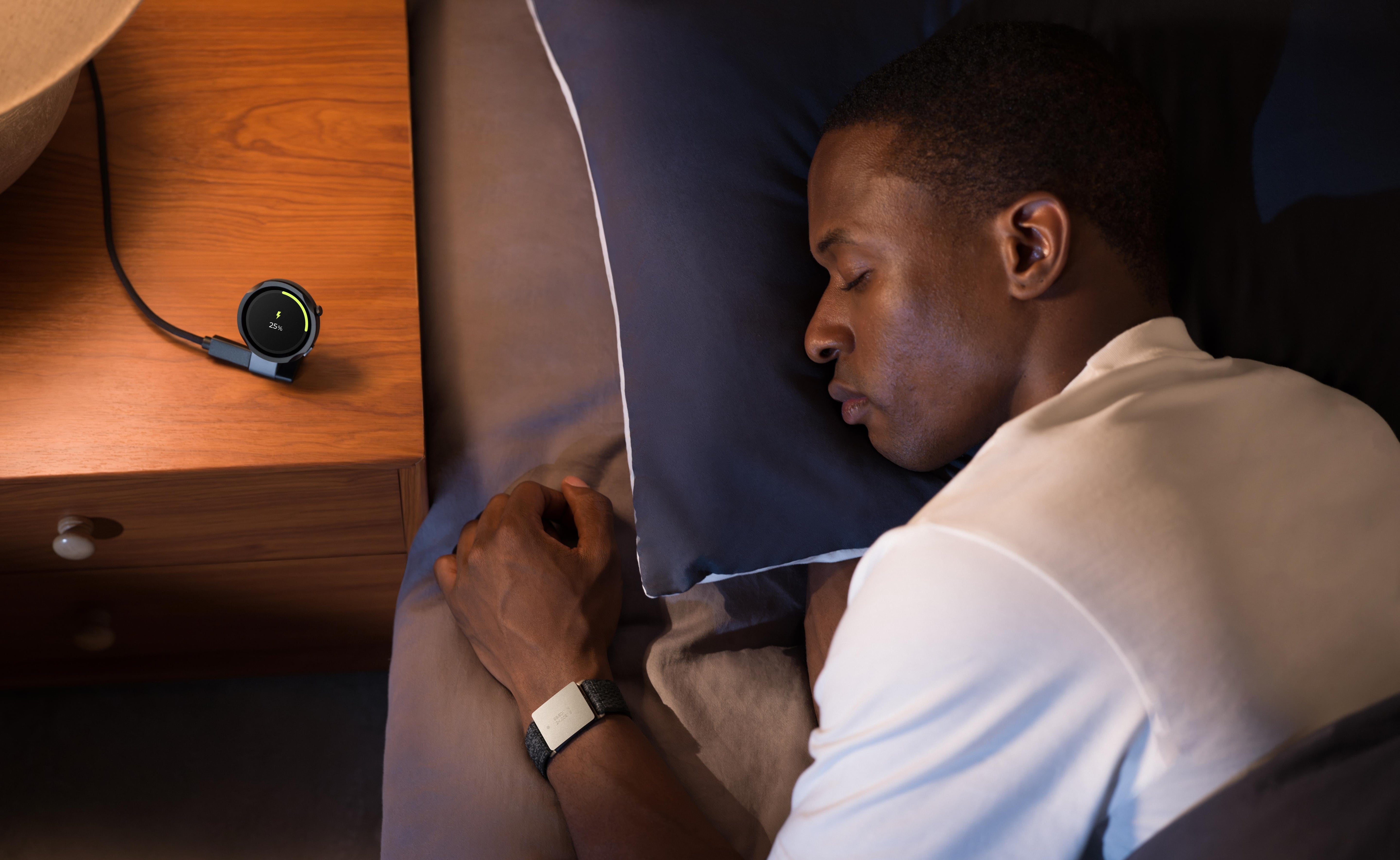
It's 6:47 AM. Your sports watch shows last night's sleep as no data, because it was charging on your nightstand while you slept. The ring on your finger gives you a readiness score of 78, but your training app is asking your watch what your weekly load looks like, and the two screens don't talk to each other.
You're not running one device to track your training. You're running two devices to do one job. And they constantly don't agree on the answer.
This is the default state for hybrid athletes today: a sports watch on the wrist for runs, rides, or HYROX sessions; a fitness tracker on the finger or arm for sleep, HRV, and recovery. Two batteries. Two apps. Two charging cables. Two sets of conclusions about how your body is doing, and the seam between them is exactly where most training decisions go wrong.
The question isn't whether you need both data streams. Serious hybrid athletes need both. The real question is whether you need two devices to capture them.
In a Nutshell
In short: A sports watch optimizes for workouts (GPS, multi-sport modes, training load) and burns battery fast per hard session. A fitness tracker optimizes for 24/7 wellness (sleep, HRV, resting HR) and needs uninterrupted wear for a 6–8 week baseline. Hybrid athletes need both, but two devices create three gaps: sleep blind spots when the watch is charging, fragmented HRV baselines, and training load vs. recovery conclusions that may not align. A modular setup (a lightweight Band on the wrist for 24/7 PPG, paired with a detachable sports-ready Dial,) with the Dial trickle-charging the Band in the background — collapses both jobs into a single continuous record.
What a Sports Watch Actually Optimizes For
A pro-grade sports watch is built around the workout where you need:
- GPS accuracy: Multi-band GNSS, keeping pace, distance, and route accurate in dense canopies, urban canyons, and switchback trails.
- Sport-specific modes: Run, ride, swim — each with its own metric set (cadence, power, splits, distance, strokes, etc).
- Training load: A daily and weekly load number that integrates duration with intensity across sessions.
- Long battery life: a single charge can last over an intense outdoor training session, or your training needs over the week
That last point is where the trade-off hides. A sports watch is designed to be charged between sessions, typically every week for daily training use, or before a long event. The most common time to charge it? Overnight. Which is exactly when your health data should be running.
What a Fitness Tracker Actually Optimizes For
A fitness tracker is built around the clock. Its job is:
- Continuous PPG: 24/7 optical heart rate sampled at 1 Hz or higher, with no breaks in the timeline.
- Sleep architecture: REM, deep, light, and wake phases, only meaningful when worn evwithout gaps.
- HRV baseline: A rolling 6–8 week average of nighttime heart rate variability. Every charge night is a hole in that baseline.
- Resting heart rate trend: Morning RHR is one of the most reliable readiness signals, but only if you have a 30+ day trailing average.
Fitness trackers are built to never come off. The form factor (ring, strap, screenless band) and the battery (3–7 days, charged in 30–90 minutes) are both designed around uninterrupted wear.
The two products aren't competitors. They optimize for different time windows.
The Three Gaps a Two-Device Setup Creates
When you run a sports watch and a fitness tracker side by side, you end up with three structural gaps that no app sync can close.
Gap 1 — The Sleep Blind Spot
Most sports watches need 60–120 minutes of charging every week. If that charging window is overnight (the most common choice), you lose 25–35% of your sleep data per week from one of your two devices. If you're trying to answer "did Tuesday's hard session affect Wednesday's sleep?", that gap is exactly where the answer should be.
Gap 2 — HRV Baseline Corruption
Decision-grade HRV needs uninterrupted overnight wear over 6–8 weeks to produce a personal baseline. Miss two nights per week and you're missing 28% of the underlying data. The 7-day rolling HRV your app shows you isn't a personal trend, it's a noisy artifact of which nights you happened to wear the device.
Gap 3 — Training Load and Recovery Not Align
Your sports watch logs training load. Your fitness tracker logs recovery. They live in different apps, calculate scores with different math, and reach different conclusions on the same day. You end up doing the integration in your head, which is exactly what software is supposed to do for you.
Why Hybrid Athletes Can't Skip Either Data Stream
A pure 5K runner can live on a sports watch and tolerate the sleep gap. A pure lifestyle user can live on a fitness tracker and skip GPS. Hybrid athletes can't do either.
A hybrid week — three runs, two strength sessions, one HYROX simulation, one long ride — produces wildly different intensities from wildly different physiological systems. The decision of "should I do the Z4 intervals tomorrow or move them to Friday?" depends simultaneously on:
- Yesterday's session load (from the sports watch)
- Last night's HRV vs. baseline (from the fitness tracker)
- Resting HR drift over the past week (from the fitness tracker)
- Cumulative load over the last 7–14 days (from the sports watch)
If those four numbers live in two ecosystems and can't be read against each other, the default is "follow the plan", which is exactly when overreaching happens.

The Modular Alternative: One Device, Two Form Factors
Most athletes accept the two-device tax because no single form factor handles both jobs well. A wrist-worn sports watch is too bulky for comfortable 24/7 wear and gives degraded HR accuracy during strength and HYROX work (artifacts caused error on deadlifts, wall balls, sled push). A ring or upper-arm band can't host the screen, buttons, and GPS antenna a workout needs.
A modular setup splits the two jobs across two parts that work as one system:
- Band — A light and thin sensor pod on a soft wrist strap, sealed to 5 ATM (shower, swim, all-day sweat). The PPG sensor lives here, sampling at 100 Hz — the inter-beat interval data behind HRV, sleep stages, and resting HR all originate on the Band, not on the Dial. Runs independently for up to 5 days.
- Dial — An AMOLED display with multi-band GNSS, controls, and navigation. Clips onto the Band on the wrist for runs, gym sessions, and daily wear (Watch mode), or detaches and locks into MossCode's own bike computer mount on the handlebars for cycling (Bike Computer mode). Up to 15 days of watch battery in Normal mode.
- One continuous record — Because the Band stays on the wrist whether the Dial is clipped on top, mounted on the bars, or sitting on the charger, the 24/7 timeline never goes dark. When the Dial reconnects to the Band after a ride, the two data streams time-align by timestamp and merge automatically.
One body sensor. One screen. Three ways to wear them, without splitting your data across two apps.
How Reverse Charging Keeps 24/7 Data Intact
The hardest engineering problem in any 24/7 wearable is the charging window. Every charge cycle is a hole in your data, and on a single-device setup, it's also a hole in your continuous training record.
MossCode PHI solves this by putting the larger battery in the Dial and trickle-charging the Band from it. The Dial — sized for a 1.54" AMOLED screen and dual-frequency GNSS — is the reserve cell for the system. Any time the Dial is clipped onto the Band on the wrist, it tops the Band up in the background. When the Dial itself runs low and goes on the magnetic charger, the Band keeps running on its own for up to 5 days, so wrist-based HRV, sleep, and resting HR never stop recording. Both parts go from empty to full in under 2 hours on the magnetic charger.
The Band itself never needs to come off the wrist for charging. The Dial is the only part that ever sits on the bench: it tops itself up on the magnetic charger, then trickle-feeds the Band back through the pin contact once it's clipped on.
Net effect: no scheduled off-wrist window for the body sensor. No nights without HRV. No sleep blind spots before a key session.
24-Hour Day, Side by Side
| Time | Two-Device Setup | Modular Setup |
|---|---|---|
| 06:30 — wake | Sports watch on charger (sleep data missing); ring on finger | Band on the wrist all night, continuous sleep + HRV at 100 Hz; Dial clipped on top trickle-charged it overnight |
| 07:00 — easy run | Strap on watch, ring stays on finger | Dial clipped onto the Band on the wrist; Band captures HR, Dial captures GNSS + pace + training load on one screen |
| 12:30 — strength | Wrist HR drops during deadlifts; ring not designed for session metrics | Band's 100 Hz PPG + 9.9 g lightweight pod reduce motion artifact at the wrist; pair an ANT+/BLE chest strap natively |
| 18:00 — recovery walk | Ring tracks, watch idle on wrist | Band on wrist logs HR and movement continuously; Dial provides the on-wrist screen for a live readout |
| 22:30 — bed | Sports watch on charger again; ring still tracking | Band on wrist records sleep + HRV; Dial clipped on top trickle-charges the Band through the night |
| End of day | 2 chargers, 2 apps, 2 ecosystems, 2 conclusions | 1 system, 1 app, 1 continuous timeline, 1 decision surface |
Cost and Complexity
A typical hybrid athlete's stack looks something like:
- Sports watch (ones that support dual-band GNSS): $399–$899
- Fitness tracker (recovery-focused ring, band, or smartwatch): $99–$499 + $0–$240/yr in subscriptions
- Two-year cost of ownership: $500–$1,500, plus the cognitive overhead of two apps
A modular Watch + Band setup collapses that to a single device purchase and one app. The dollar savings are real, but the more important number is the time you don't spend cross-referencing two ecosystems.
Note on early access: MossCode PHI isn't on sale yet. Drop your email to join the waitlist for launch timing and pricing as soon as they're locked in, and join the community to be first in line for the upcoming beta tester program.
Who This Is For — and Who It's Not For
You'll get real value if you are:
- A hybrid athlete: multiple sessions/week across at least two disciplines (run + lift, run + HYROX, ride + lift). You need both session data and 24/7 baseline.
- A masters athlete: VO2 max and HRV trend lines matter more than single-day numbers. A broken baseline is a broken decision.
- An endurance athlete: Ultras, gran fondos, multi-day events — 20+ hours of GPS and a clean recovery picture on either side.
- A current two-device user: You already accept the data cost; you just want to stop paying it.

It's probably not for you if:
- You're a single-sport casual user: A 5K-three-times-a-week runner with no interest in recovery analytics. A basic sports watch is enough.
- You only cares about steps, calorie burns and notifications.
- You have trouble sleeping with wearables on. : 24/7 features lose most of their value if the sensor comes off at night. </aside>
FAQ
-
Can the Band replace a wellness ring?
Yes — for HRV, resting HR, sleep stages, and continuous PPG, the Band reads from the same physiological source (optical heart rate). The form factor is different (a lightweight 9.9 g wrist pod vs. a finger ring), but the underlying measurements and trend lines are equivalent.
-
How accurate is wrist HR during HYROX and heavy strength work?
Optical wrist HR loses 5–15% accuracy during high-grip and high-vibration efforts — deadlifts, wall balls, sled push — because the sensor shifts on flexed forearm muscles. The Band tackles this at the wrist itself: a 100 Hz raw PPG sampling rate gives the filtering algorithm far more data points to separate true pulse from motion noise, and the 9.9 g sensor pod has less mass to shift against the skin in the first place. For sessions where you want an ECG-grade signal regardless, MossCode PHI pairs natively with ANT+ and BLE chest straps — the wrist reading and the strap reading record into the same session file.
-
What happens if I only wear it during workouts?
You'll get the full sports-watch experience (GPS, multi-sport, training load), but you'll lose most of the 24/7 advantage — HRV baseline, sleep, resting HR trends. If that's the use case, a traditional sports watch is the simpler choice. The modular design pays off when the device stays on around the clock.
-
Does the modular system work with third-party training apps — especially Strava?
Yes — MossCode PHI is built to slot into the training stack you already use, with Strava as a first-class integration. Link your Strava account once in the MossCode app and every workout recorded on the Watch (run, ride, HYROX, strength, swim) auto-syncs to your Strava profile — no manual file export, no duplicate logging, no "forgot to upload" gaps in your weekly mileage. Saved routes in Strava sync back into the MossCode app, so a route you starred on the desktop is ready to pull onto the Dial before a long ride or trail run. For live sessions where you want a redundant feed, the Dial also dual-broadcasts over ANT+ and Bluetooth, pairing natively with bike computers, smart trainers, and chest straps.
-
How do I get notified at launch — and how do I join the beta tester program?
MossCode PHI isn't on sale yet. Drop your email in the waitlist to be the first to hear launch timing and pricing. For the upcoming beta tester program, join the community, beta invites go out to community members before they go anywhere else.
Bottom Line
The two-device tax isn't a sign that you bought the wrong gear. It's a sign that the category was built around session devices and lifestyle devices as separate jobs. For most users, that split was fine.
For hybrid athletes, it is not efficient. Training intensity and 24/7 recovery are two faces of the same physiological system, and reading them through two devices, two apps, and two charging schedules turns the most actionable data into background noise.
A modular setup - Band on the wrist for 24/7 body data, Dial clipped on top for training — closes the seam. One sensor, one timeline, one decision surface for the next session.
If you're already wearing two devices, you've already made the case for needing both data streams. The remaining question is just whether they should live on one wrist.
See the MossCode PHI modular system → Join the waitlist
One Dial. Watch mode + Band mode + 24/7 mode. Drop your email for launch updates, and join the community to be first in line for the beta tester program.
Share:
Do You Only Have One VO2 Max? The Truth Is, You Have One Per Sport
Why Pushing Harder Is Making You Slower: A Hybrid Athlete's Guide to Recovery